
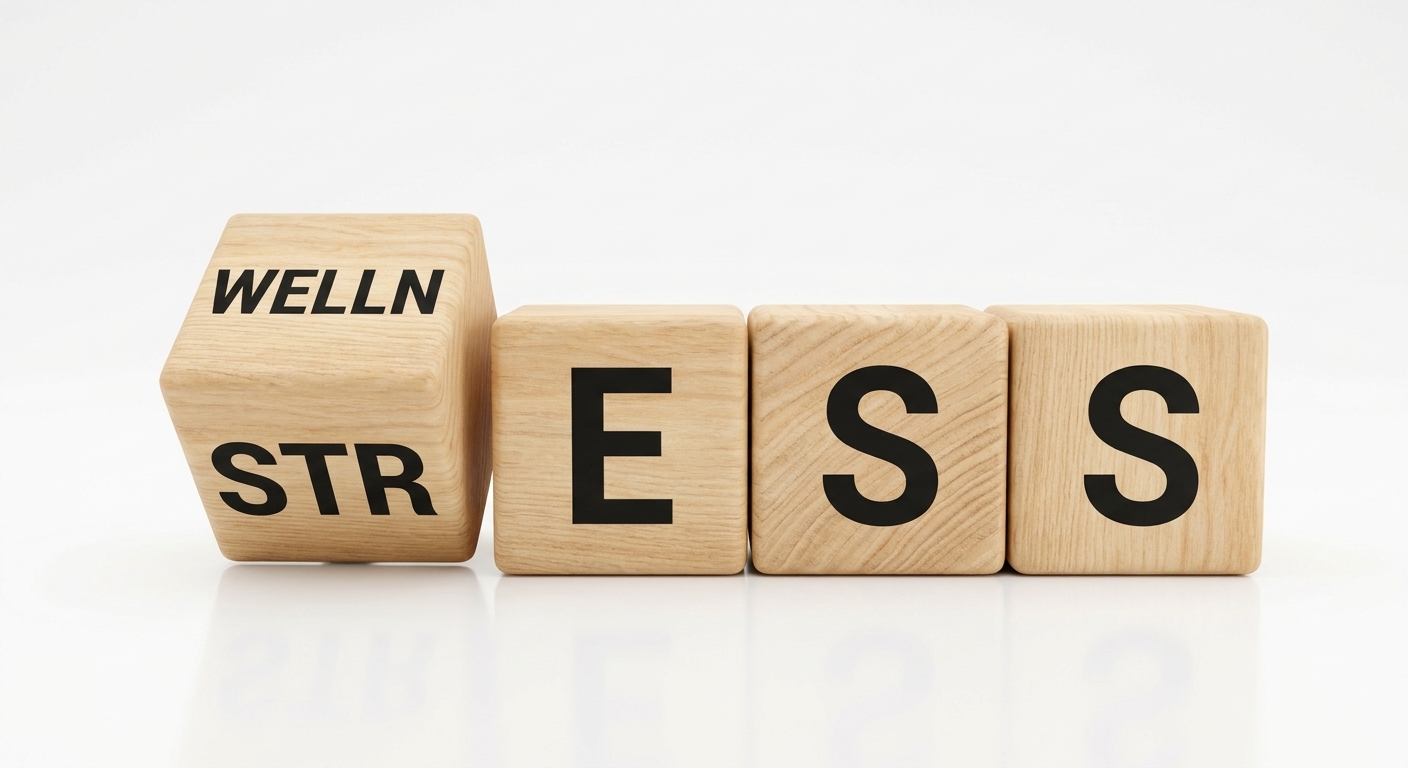
Stress: The Alarm System That Keeps Us Safe
Written and clinically reviewed by Natascha Madden, Registered Psychologist, Brisbane Counselling Centre. Published November 2026. Reading time: 10 minutes.
Stress is the body’s built-in alarm system. When the brain detects a threat or a demand, it releases adrenaline and cortisol to sharpen attention, mobilise energy and prepare us to act. In short bursts this response protects us and can improve performance. It becomes harmful when it stays switched on for weeks or months without recovery.
Key points
- Stress is a response, not an event. It depends on how the brain weighs a demand against our resources to meet it.
- The sympathetic nervous system switches the response on. The parasympathetic nervous system switches it off.
- Acute stress is short and usually helpful. Chronic stress wears the body down over time.
- How we think about stress changes how the body responds to it. This is called stress reappraisal.
- Excitement and anxiety are both high-arousal states. Relabelling nerves as excitement can improve performance.
Most of us talk about stress as something to get rid of. Yet the racing heart before a presentation, the knot in the stomach before a hard conversation and the burst of focus before a deadline all come from the same system, and that system evolved for one purpose: to keep us alive. This article explains where the idea of stress came from, what happens in the body, when stress helps, when it harms, and what the research says about working with it.
What is stress?
Stress is the response of the body and mind to any demand that seems to outweigh the resources we have to meet it(1). The trigger is called a stressor. Stressors can be external, such as a deadline, a conflict, money pressure or illness. They can also be internal, such as perfectionism, self-criticism or worry about the future.
Two points follow from this definition. First, stress is a response and not the event itself. Second, the response depends on appraisal. Psychologists Richard Lazarus and Susan Folkman described two rapid judgements the brain makes: “Is this a threat to me?” and “Can I cope with it?”(1). This is why the same event, such as public speaking, can leave one person energised and another person overwhelmed.
Not all stress is harmful. Hans Selye, the founder of modern stress research, distinguished eustress (stress that motivates and energises) from distress (stress that overwhelms and depletes)(2). More than a century ago, Yerkes and Dodson showed that performance improves as arousal rises, but only up to a point, after which it declines(3). Readers familiar with the Window of Tolerance will recognise the same idea: there is an optimal zone of arousal, and difficulty begins when we are pushed above or below it.
A short history of stress research
The psychological meaning of the word “stress” is only about a century old. It was borrowed from physics and engineering, where it describes a force applied to a material. Our understanding has moved from a single bodily reaction to a system shaped by thought, relationships and time.
| When | Researcher | Contribution |
|---|---|---|
| 1915 | Walter Cannon | Described the “fight or flight” response, the body’s rapid mobilisation in the face of danger(4). He later introduced the concept of homeostasis, the body’s drive to maintain internal balance(5). |
| 1936 | Hans Selye | Found that very different harmful agents produced the same bodily pattern in rats(6). He named this the General Adaptation Syndrome, with three stages: alarm, resistance and exhaustion. |
| 1966 to 1984 | Richard Lazarus and Susan Folkman | Showed that stress depends on how a person appraises an event and their ability to cope with it, not on the event alone(1, 7). |
| 1993 | Bruce McEwen and Eliot Stellar | Introduced “allostatic load”, the cumulative wear and tear on the body from repeated or prolonged stress(8). |
| 2000 | Shelley Taylor and colleagues | Proposed “tend and befriend”: under stress people, and women in particular, often protect others and seek connection instead of fighting or fleeing(9). |
More recent clinical writing has added further survival responses such as freeze and fawn. These are discussed in our article on understanding the fawn response.
What happens when we encounter stress?
When the brain detects a possible threat, whether a snarling dog or a sharply worded email, the amygdala (the brain’s threat detector) signals the hypothalamus (its command centre). Two systems then switch on(10).
The fast system: adrenaline (within seconds)
The sympathetic nervous system signals the adrenal glands, which sit on top of the kidneys, to release adrenaline and noradrenaline. As a result:
- the heart beats faster and blood pressure rises, sending more blood to the muscles
- breathing quickens to take in more oxygen
- stored glucose is released for immediate energy
- pupils widen and attention narrows onto the threat
- digestion and other non-urgent functions slow down
The slower system: cortisol (within minutes)
The hypothalamus also activates the hypothalamic-pituitary-adrenal (HPA) axis. It releases a hormone that signals the pituitary gland, which in turn signals the adrenal glands to release cortisol. Cortisol levels peak around 20 to 30 minutes after the stressor begins. Cortisol keeps blood sugar available, sustains alertness and helps the brain store a memory of what happened so we can respond faster next time. When the threat passes, cortisol itself signals the brain to switch the response off(10).
Every one of these changes is protective. The body is preparing us to run faster, think faster and survive. As the neuroscientist Robert Sapolsky has pointed out, the system was built for short physical emergencies. The difficulty for humans is that we can switch it on with thought alone and keep it running for months(11).
The sympathetic and parasympathetic nervous systems
The stress response is run by the autonomic nervous system, which controls functions we do not consciously direct. It has two main branches that work together, much like the accelerator and the brake of a car.
| Sympathetic (“fight or flight”) | Parasympathetic (“rest and digest”) | |
|---|---|---|
| Role | Mobilises the body for action | Restores, repairs and conserves energy |
| Heart rate | Speeds up | Slows down |
| Breathing | Faster and shallower | Slower and deeper |
| Digestion | Slows or pauses | Active |
| Muscles | Tense and ready | Relaxed |
| Energy | Released for immediate use | Stored and replenished |
The vagus nerve is the main pathway of the parasympathetic system. It runs from the brainstem to the heart, lungs and gut, and it acts as the body’s brake. You can read more about its role in our article on Polyvagal Theory.
A healthy stress response has a rhythm: mobilise, act, recover. The sympathetic system fires, we deal with the challenge, and the parasympathetic system brings us back to baseline. Problems arise when the recovery phase does not happen.
Acute stress vs chronic stress: what is the difference?
The difference between acute and chronic stress is time and recovery. Acute stress is short-lived and ends when the challenge ends. Chronic stress continues for weeks, months or years because the stressor, or our sense of threat, does not resolve.
| Acute stress | Chronic stress | |
|---|---|---|
| Duration | Minutes to hours | Weeks, months or years |
| Examples | A job interview, a near miss in traffic, a sporting final | Ongoing financial strain, caring responsibilities, workplace conflict, unresolved trauma |
| Body’s response | Rises quickly and then returns to baseline | Stays raised, or the system becomes dysregulated |
| Typical effect | Sharper focus, more energy and motivation | Fatigue, irritability, poor sleep and health risks |
| Recovery | Complete | Incomplete or absent |
In the right dose, acute stress is useful. Short-term stress can temporarily strengthen parts of the immune response, which makes sense for an animal that may be about to be injured(12). In one laboratory study, brief stress increased the growth of new cells in the memory centre of the rat brain(13). For people, manageable challenges followed by recovery are how resilience is built.
The chronic stress effect: when protection becomes harm
A system designed for emergencies is costly to run all the time. McEwen called this cost allostatic load: the wear and tear that builds up when stress hormones stay raised or fail to switch off properly(8, 14). Research links chronic stress to effects across the body:
- Heart and blood vessels: long-term work and life stress is associated with a higher risk of heart disease and stroke(15).
- Immune system: a review of 30 years of research found that chronic stress suppresses immune function, in contrast to the short-term boost seen with acute stress(16).
- Metabolism: prolonged cortisol exposure promotes abdominal fat storage and insulin resistance(14).
- Brain: chronic stress is linked to changes in the hippocampus, prefrontal cortex and amygdala, which are the regions responsible for memory, decision-making and emotion(10).
- Mood: stressful life events are among the strongest predictors of depression(17), and chronic stress commonly sits behind anxiety and burnout.
- Sleep: stress disrupts sleep, and lost sleep raises cortisol the following evening, which creates a cycle that is hard to break(18).
Common signs that stress has become chronic include constant tiredness, trouble falling or staying asleep, irritability, frequent headaches or stomach upsets, difficulty concentrating, withdrawing from people, and relying more on alcohol, food or screens to cope.
The alarm system has not failed in these cases. It is working exactly as designed, but it has not received the all clear.
Stress reappraisal: can changing how we think about stress change its effect?
Stress reappraisal is the practice of interpreting the body’s stress signals, such as a pounding heart and fast breathing, as resources that help us perform, instead of signs that something is wrong. The research behind it is some of the most practical in modern psychology.
- Students who were told that arousal improves performance scored higher on a practice maths exam, and on the real exam weeks later, than students who were not told this(19).
- Adults who were taught to view their stress response as helpful before a public speaking task showed a healthier cardiovascular pattern, with blood vessels that stayed more relaxed, and paid less attention to threat(20).
- People who hold a “stress is enhancing” mindset report better health and work performance, and this mindset can be taught(21).
- A study of almost 29,000 American adults found that high stress was linked to a 43% higher risk of premature death, but only among people who also believed stress was harming their health(22). Health psychologist Kelly McGonigal brought this finding to a wide audience in The Upside of Stress(23).
Some care is needed with these findings. The mortality study shows an association and does not prove that beliefs alone cause harm. Reappraisal is also not positive thinking, and it does not mean putting up with circumstances that are unsafe or unreasonable. It works best for short-term performance stress. Chronic stress and trauma usually call for changes to the situation, more support, or professional help.
Excitement as a state of stress
Excitement and anxiety feel very different, yet in the body they are close relatives. Both are high-arousal states that involve a faster heart rate, quicker breathing, a surge of adrenaline and heightened alertness. The main difference is the meaning the mind gives to the sensations. Anxiety says “something bad may happen”. Excitement says “something good may happen”.
Alison Wood Brooks of Harvard Business School tested this in a series of experiments(24). Before singing karaoke, giving a speech or sitting a maths test, people were asked either to try to calm down or to say “I am excited” out loud. Those who relabelled their nerves as excitement sang more accurately, were rated as more persuasive and confident speakers, and scored higher on the maths test.
The explanation is simple. Calming down requires the body to shift from high arousal to low arousal, which is hard to do on command. Moving from anxiety to excitement keeps the arousal and changes only the label. The energy is already there, and it can be pointed at the task.
So the butterflies before something that matters are not a sign that we are about to fail. They are a sign that the body has recognised the moment as important and is getting ready to meet it.
Stress busters: six evidence-based ways to settle the stress response
Because the stress response is physical, the most reliable ways to settle it involve the body as well as the mind. Each of the following helps the parasympathetic system apply the brake.
- Slow your breathing. Breathing at around six breaths a minute, with a longer out-breath than in-breath, increases parasympathetic activity and is linked to feeling calmer and more alert(25).
- Move your body. The stress response prepares us for physical action, and exercise completes it. Regular physical activity reduces anxiety and makes us less reactive to future stress(26).
- Practise mindfulness. Mindfulness-based stress reduction has been shown to lower stress in healthy adults(27). For people with a history of trauma, mindfulness is best introduced with professional guidance, as it can sometimes intensify symptoms(28).
- Connect with people. Support from someone we trust lowers the cortisol response to stress(29). Reaching out is the “tend and befriend” response at work, and it is one of our oldest forms of protection(9).
- Protect your sleep. Sleep is when the stress system resets. Regular sleep and wake times, and a wind-down period without screens, help to break the stress and sleep cycle(18).
- Rename the feeling. Before a challenge, try telling yourself “my body is getting ready” or “I am excited”(20, 24). It takes a few seconds and costs nothing.
When should you seek support for stress?
Self-help strategies are a good start. It is worth speaking with a health professional if stress has lasted more than a few weeks and you notice any of the following:
- sleep, appetite or energy have changed noticeably
- you feel constantly on edge, flat or tearful
- work, study or relationships are being affected
- you are using alcohol or other substances to cope
- the stress is linked to a traumatic event
Evidence-based approaches for stress include cognitive behavioural therapy (CBT), acceptance and commitment therapy (ACT) and mindfulness-based therapies. Where stress is connected to trauma, EMDR therapy may also be appropriate. Your GP can assess whether you are eligible for Medicare rebates under a Mental Health Treatment Plan.
If you are in crisis or need urgent support, call Lifeline on 13 11 14. In an emergency, call 000.
We can help
Stress is not a sign of weakness. It is a sign that your body is trying to protect you. If that protection has turned into exhaustion, you do not have to manage it alone. The psychologists and counsellors in attendance at Brisbane Counselling Centre work with stress and burnout, anxiety and trauma every day. Appointments are available in person on Wickham Terrace in Spring Hill, and online across Australia and internationally.
Call our reception team on (07) 3831 4452 or contact us online to arrange an appointment.
References
- Lazarus, R.S., Folkman, S. (1984). Stress, Appraisal, and Coping. New York: Springer.
- Selye, H. (1974). Stress Without Distress. Philadelphia: J.B. Lippincott.
- Yerkes, R.M., Dodson, J.D. (1908). The relation of strength of stimulus to rapidity of habit-formation. Journal of Comparative Neurology and Psychology, 18(5), 459-482.
- Cannon, W.B. (1915). Bodily Changes in Pain, Hunger, Fear and Rage. New York: D. Appleton and Company.
- Cannon, W.B. (1932). The Wisdom of the Body. New York: W.W. Norton.
- Selye, H. (1936). A syndrome produced by diverse nocuous agents. Nature, 138, 32.
- Lazarus, R.S. (1966). Psychological Stress and the Coping Process. New York: McGraw-Hill.
- McEwen, B.S., Stellar, E. (1993). Stress and the individual: Mechanisms leading to disease. Archives of Internal Medicine, 153(18), 2093-2101.
- Taylor, S.E., et al. (2000). Biobehavioral responses to stress in females: Tend-and-befriend, not fight-or-flight. Psychological Review, 107(3), 411-429.
- McEwen, B.S. (2007). Physiology and neurobiology of stress and adaptation: Central role of the brain. Physiological Reviews, 87(3), 873-904.
- Sapolsky, R.M. (2004). Why Zebras Don’t Get Ulcers (3rd ed.). New York: Henry Holt.
- Dhabhar, F.S. (2014). Effects of stress on immune function: The good, the bad, and the beautiful. Immunologic Research, 58(2-3), 193-210.
- Kirby, E.D., et al. (2013). Acute stress enhances adult rat hippocampal neurogenesis and activation of newborn neurons via secreted astrocytic FGF2. eLife, 2, e00362.
- McEwen, B.S. (1998). Protective and damaging effects of stress mediators. New England Journal of Medicine, 338(3), 171-179.
- Kivimäki, M., Steptoe, A. (2018). Effects of stress on the development and progression of cardiovascular disease. Nature Reviews Cardiology, 15(4), 215-229.
- Segerstrom, S.C., Miller, G.E. (2004). Psychological stress and the human immune system: A meta-analytic study of 30 years of inquiry. Psychological Bulletin, 130(4), 601-630.
- Hammen, C. (2005). Stress and depression. Annual Review of Clinical Psychology, 1, 293-319.
- Leproult, R., et al. (1997). Sleep loss results in an elevation of cortisol levels the next evening. Sleep, 20(10), 865-870.
- Jamieson, J.P., et al. (2010). Turning the knots in your stomach into bows: Reappraising arousal improves performance on the GRE. Journal of Experimental Social Psychology, 46(1), 208-212.
- Jamieson, J.P., Nock, M.K., Mendes, W.B. (2012). Mind over matter: Reappraising arousal improves cardiovascular and cognitive responses to stress. Journal of Experimental Psychology: General, 141(3), 417-422.
- Crum, A.J., Salovey, P., Achor, S. (2013). Rethinking stress: The role of mindsets in determining the stress response. Journal of Personality and Social Psychology, 104(4), 716-733.
- Keller, A., et al. (2012). Does the perception that stress affects health matter? The association with health and mortality. Health Psychology, 31(5), 677-684.
- McGonigal, K. (2015). The Upside of Stress: Why Stress Is Good for You, and How to Get Good at It. New York: Avery.
- Brooks, A.W. (2014). Get excited: Reappraising pre-performance anxiety as excitement. Journal of Experimental Psychology: General, 143(3), 1144-1158.
- Zaccaro, A., et al. (2018). How breath-control can change your life: A systematic review on psycho-physiological correlates of slow breathing. Frontiers in Human Neuroscience, 12, 353.
- Salmon, P. (2001). Effects of physical exercise on anxiety, depression, and sensitivity to stress: A unifying theory. Clinical Psychology Review, 21(1), 33-61.
- Khoury, B., et al. (2015). Mindfulness-based stress reduction for healthy individuals: A meta-analysis. Journal of Psychosomatic Research, 78(6), 519-528.
- Treleaven, D.A. (2018). Trauma-Sensitive Mindfulness: Practices for Safe and Transformative Healing. New York: W.W. Norton.
- Heinrichs, M., et al. (2003). Social support and oxytocin interact to suppress cortisol and subjective responses to psychosocial stress. Biological Psychiatry, 54(12), 1389-1398.
This article is for general educational purposes and is not a substitute for individual medical or psychological advice. If you are concerned about your health, please speak with your GP or a registered health professional.
