
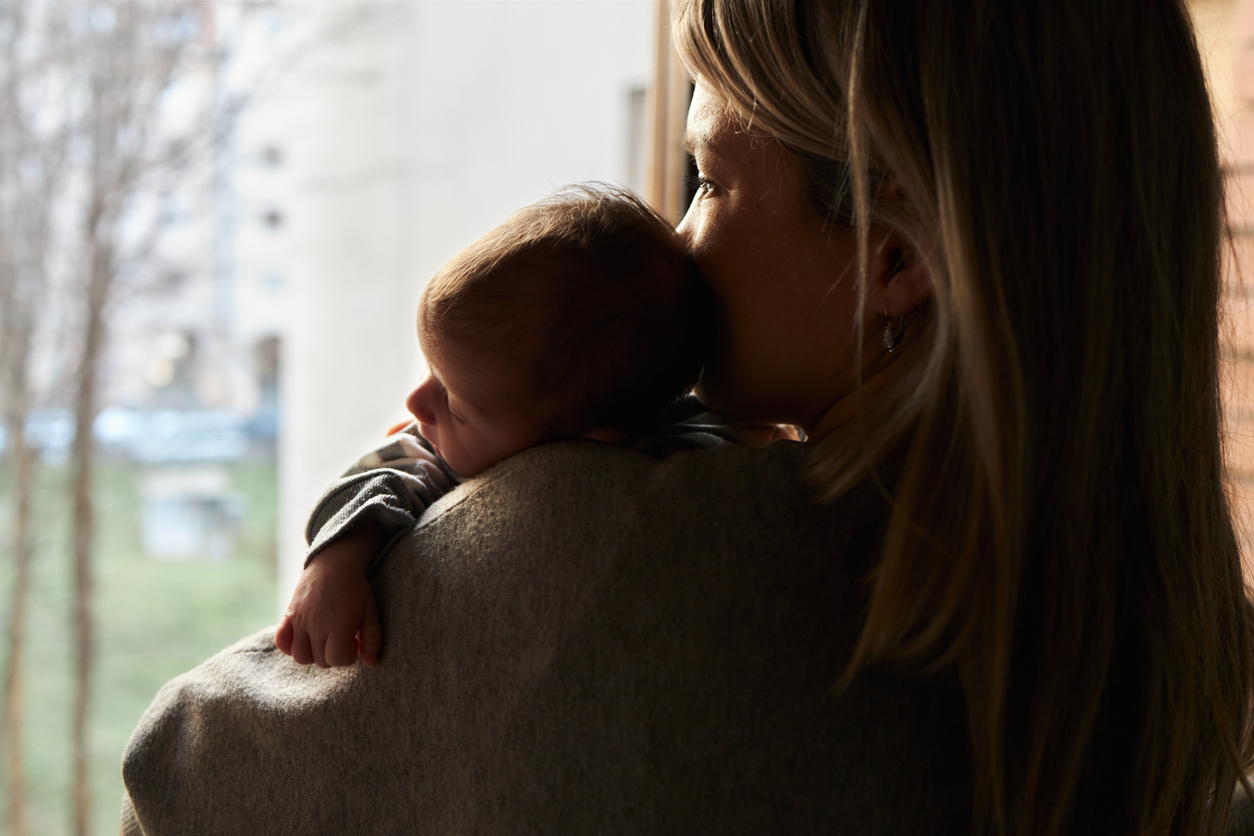
Support for expecting and new parents
Psychologists and counsellors in attendance at our Centre help parents with anxiety and depression during pregnancy and after birth, difficult or traumatic birth experiences, pregnancy loss, adjusting to parenthood, and changes in their relationship.
You can bring your baby to sessions if that is easier, and online sessions are available if leaving the house is hard.
Written and clinically reviewed by Natascha Madden, Registered Psychologist (AHPRA reg. PSY0000953827), Brisbane Counselling Centre. Last reviewed: October 2026
What is perinatal anxiety and depression?
The perinatal period runs from pregnancy until about a year after birth. Perinatal anxiety and depression are mental health conditions that can begin at any time during this period. They are more than the “baby blues”, which usually pass within a couple of weeks of birth.
They are common. PANDA reports that up to one in five expecting and new mothers, and up to one in ten expecting and new fathers, experience perinatal anxiety or depression. Postnatal depression and postpartum anxiety are the terms people most often use for these experiences after a baby is born.
Signs to look out for
- constant worry, racing thoughts or a sense that something bad will happen
- panic attacks, or feeling on edge and unable to relax
- low mood, tearfulness or feeling numb or disconnected
- feeling you are not coping, or are not a good enough parent
- difficulty sleeping even when the baby sleeps
- irritability, anger or resentment
- intrusive, unwanted thoughts about the baby being harmed
- withdrawing from your partner, family and friends
- loss of interest in things you used to enjoy
If these have lasted more than two weeks, or are affecting how you function day to day, it is worth talking to someone. Intrusive thoughts are a common symptom of anxiety and do not mean you will act on them. A psychologist or counsellor can help you understand and manage them.
Who can be affected?
Anyone who is pregnant or has a new baby can be affected, including first-time and experienced parents, fathers and non-birthing partners, adoptive and surrogate parents, and parents of babies born through IVF. Some things can increase the risk, such as a previous history of anxiety or depression, a difficult pregnancy or birth, pregnancy loss, a baby in special care, lack of support, relationship stress, or other major life changes.
How can counselling help?
Your psychologist or counsellor will listen without judgement, help you make sense of what is happening and work with you on practical strategies. Treatment is tailored to you and may include:
- Cognitive behaviour therapy (CBT) to manage worry, intrusive thoughts and self-critical thinking
- Acceptance and Commitment Therapy (ACT) to cope with difficult feelings and focus on what matters to you as a parent
- EMDR for a traumatic birth or a distressing medical experience. EMDR is an area of specialist expertise at our Centre.
- Support with grief after pregnancy loss or a difficult start. See grief and loss counselling.
- Couples sessions to support your relationship through the changes a baby brings. See couples counselling.
Your practitioner can also work with your GP, obstetrician, midwife or child health nurse, with your consent.
Postpartum psychosis: when to get urgent help
Postpartum psychosis is rare, affecting about one to two in every 1,000 new mothers, but it is a medical emergency. It usually begins suddenly, often within the first two weeks after birth. Signs include:
- confusion, or seeming not to be themselves
- seeing or hearing things that are not there
- strong beliefs that are not true, such as believing the baby is in danger or is not their baby
- very high or racing mood, or rapid swings between high and low
- severe agitation, or being unable to sleep even when they have the chance
This is different from the intrusive thoughts of perinatal anxiety. Parents with anxiety are usually horrified by their thoughts and know they are not true. With psychosis, a person may lose touch with what is real.
If you notice these signs in yourself or someone else, do not wait for a counselling appointment. Call 000 or go to your nearest hospital emergency department. In Queensland you can also call 1300 MH CALL (1300 642 255) for urgent mental health support. Women with a history of bipolar disorder or a previous episode of postpartum psychosis are at higher risk, so speak to your GP, obstetrician or midwife early in pregnancy about a plan.
Once the acute episode is treated by a medical team, counselling can help with recovery, processing what happened, and rebuilding confidence as a parent.
How do I book an appointment?
- Please call (07) 3831 4452 or complete our enquiry form. Our reception team will suggest a suitable practitioner. You do not need a referral to book.
- See your GP if you want a Medicare rebate. Ask for a Mental Health Treatment Plan. You can book with us before or after that appointment. If you have private health cover, you may be eligible for a rebate through your health fund instead.
- Attend in person or online. Online and telephone sessions are available if getting out with a baby is difficult.
Brisbane Counselling Centre is at Level 7, 87 Wickham Terrace, Spring Hill, near the Brisbane CBD, about five minutes’ walk from Central Station, with lift access to level 7. We are open Monday to Friday 7:30am to 5:30pm and Saturday 8:30am to 5:00pm. Online and telephone sessions are also available.
Meet the psychologists and counsellors or see our fees and rebate information.
Frequently asked questions
What is the difference between the baby blues and postnatal depression?
Can dads and partners get postnatal depression?
Do I need a referral?
How much does it cost?
Can I bring my baby to my session?
Is it normal to have scary thoughts about my baby?
Can counselling help after a traumatic birth?
What is postpartum psychosis?
Can I have sessions online?
Where are you located and is there parking?
Help is available
If you are struggling during pregnancy or since your baby arrived, please reach out. Feeling this way is common and treatable, and getting support helps you and your family. Call our reception team or send us a message.
For support right now, call the PANDA National Helpline on 1300 726 306 or Lifeline on 13 11 14 (24 hours). If you or your baby are in immediate danger, call 000.
